
Passport & Photo Requirements for Your F-1 Visa Interview
Getting ready for your F-1 visa interview can feel overwhelming. You have filled out forms, paid fees, and gathered piles of documents.
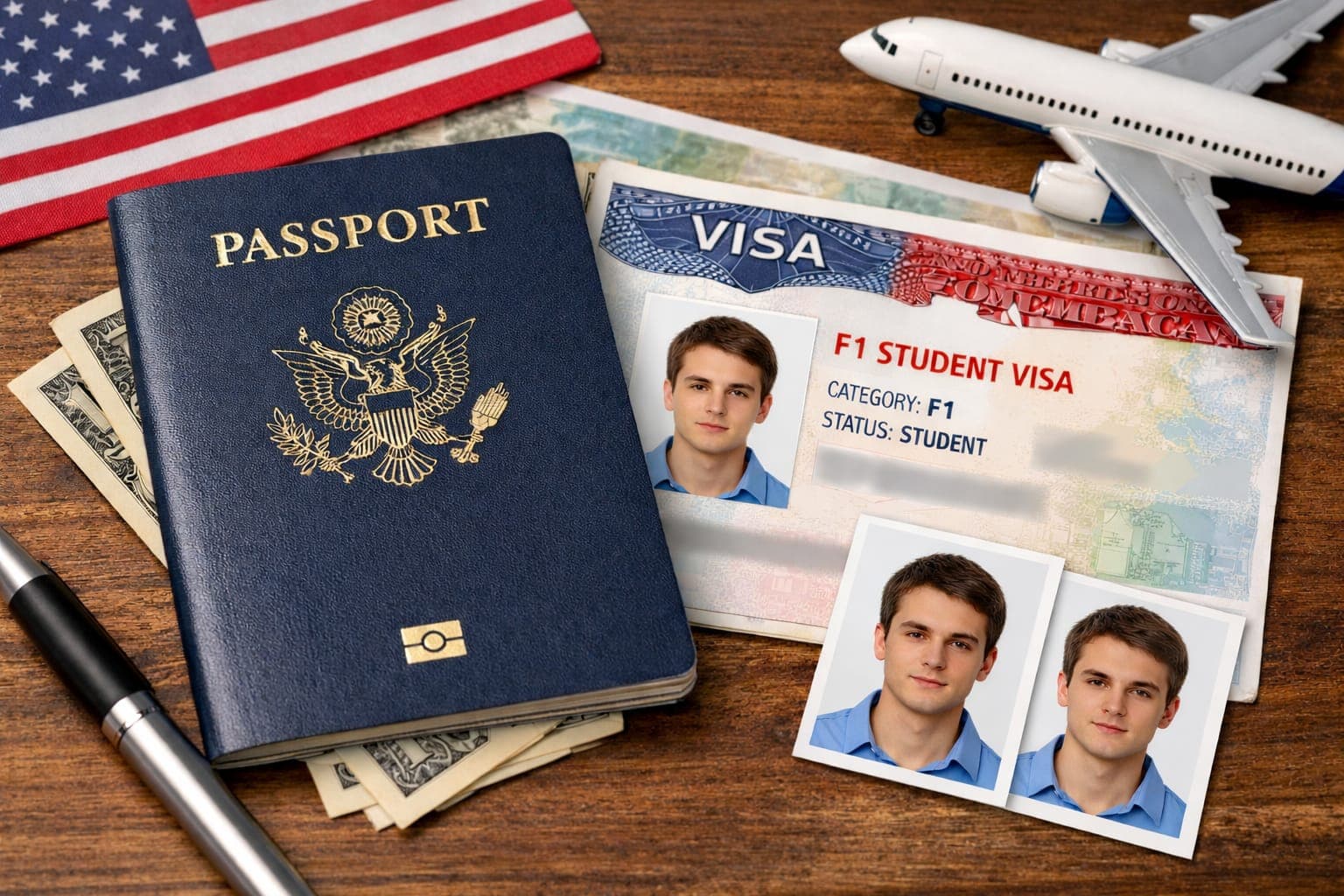
Introduction
Getting ready for your F-1 visa interview can feel overwhelming. You have filled out forms, paid fees, and gathered piles of documents. But two things that many students overlook until the last minute are their passport and visa photo.
These are not just formalities. A passport that doesn't meet the requirements or a photo that looks slightly off can get your application rejected before the interview even begins. This guide breaks everything down in simple, clear terms so you walk into that embassy fully prepared.
Part One: Passport Requirements
1. Your Passport Must Be Valid Long Enough
This is the most important rule. Your passport must be valid for at least six months after the date you plan to leave the United States. Not just while you are there — six months beyond your departure.
For example, if your study program ends in May 2027, your passport should ideally be valid until at least November 2027. If it expires before that, renew it before your interview.
2. You Need Empty Pages
Your passport must have at least two completely blank pages for the visa stamp. Pages that already have stamps or markings do not count. If your passport is running out of space, get a new one before applying.
3. Your Passport Must Be in Good Condition
A damaged passport will be rejected. This includes passports with torn pages, water damage, faded print, a loose cover, or any signs of tampering. If your passport looks worn out, it is safer to renew it rather than risk a rejection at the window.
4. It Must Be Machine-Readable
All modern passports are machine-readable, but if you have an older passport that does not have the two lines of text at the bottom of the photo page, it will not be accepted. Check your passport and renew if needed.
5. Your Name Must Match All Your Documents
This is something many students miss. The name on your passport must be exactly the same as the name on your DS-160 form, your I-20, and your financial documents. If even one letter is different, it can cause serious delays. Double-check everything before your interview day.
6. Bring Your Old Passports Too
Even if your old passport has expired, bring it to the interview. Consular officers like to see your travel history. It helps them understand your background and can actually work in your favor.
Important Reminder: If you renewed your passport after filling out your DS-160 form, you must update the form with your new passport number. Forgetting this step is a very common mistake that can delay or even deny your visa.
Part Two: Visa Photo Requirements
The U.S. government has very specific rules about the photo you submit with your visa application. These rules exist because your photo is used for facial recognition and biometric processing. Even a small error can cause your photo to be rejected.
Here is everything you need to know.
1. Size
Your photo must be 2 inches by 2 inches (about 51mm × 51mm). This is the standard U.S. visa photo size. Most professional photo studios and photo apps know this size, but always confirm before printing.
2. Taken Recently
The photo must have been taken within the last six months. You cannot use a photo from a previous visa application, even if you look the same. It must be recent.
3. Color Photo Only
Black and white photos are not accepted. Your photo must be in full color.
4. White or Off-White Background
The background behind you must be plain white or very light white. No patterns, no colors, no shadows on the background. This is one of the most common reasons photos get rejected. If you are taking the photo at home, make sure the wall behind you is clean and evenly lit.
5. Your Face Must Be Clearly Visible
Your face should take up about 50 to 75 percent of the photo. You should be facing the camera directly, not at an angle. Your eyes must be open and looking straight into the lens.
6. Neutral Expression
Keep a calm, neutral expression. Your mouth should be closed. Do not smile widely or frown. Think of it as a relaxed, natural look — nothing forced.
7. No Glasses
Since 2016, glasses are not allowed in U.S. visa photos. There are no exceptions, even for medical reasons. Remove your glasses before the photo is taken. Contact lenses are fine as long as they are not tinted or colored.
8. Head Coverings
You may wear a head covering only if it is part of your daily religious practice. Even then, your entire face must be fully visible — from your chin to your forehead, and from ear to ear. No shadows from the covering should fall on your face.
9. No Editing or Filters
Do not touch up the photo digitally. No skin smoothing, brightness adjustments, or any filters. The photo must look exactly as you do in real life. Edited photos can be flagged and rejected during automated processing.
10. Printed on Photo Paper
The photo must be printed on proper photo paper, not regular printer paper. It should have a slight gloss, not a matte finish.
How Many Photos Should You Bring?
You will need to upload one digital photo when filling out your DS-160 form online. On the day of your interview, bring two printed copies of your photo just in case. Some embassies ask for them, and it is always better to have extras.
Part Three: Quick Checklist Before Your Interview
Go through this list the night before your appointment so you are not rushing in the morning.
Passport:
Valid for at least 6 months beyond your program end date
At least two blank pages available
In good, undamaged condition
Name matches all other documents exactly
Old passports packed and ready to bring
Photo:
2×2 inch size, color, printed on photo paper
Taken within the last 6 months
White background, no shadows
No glasses, no head covering (unless religious)
Neutral expression, face forward, eyes open
No digital editing or filters
Other Documents to Pack:
DS-160 confirmation page (printed)
SEVIS fee receipt (I-901)
Interview appointment letter
I-20 signed by you and your DSO
Financial documents (bank statements, sponsor letters, etc.)
Conclusion
The F-1 visa interview is not something to fear. Consular officers are not trying to trick you. They want to approve qualified students. Your job is to make their job easy by showing up with every document in order.
Your passport and photo are the very first things they check. Getting these right costs you nothing except a little time and attention. Get them right, and you can walk into your interview with full confidence.